
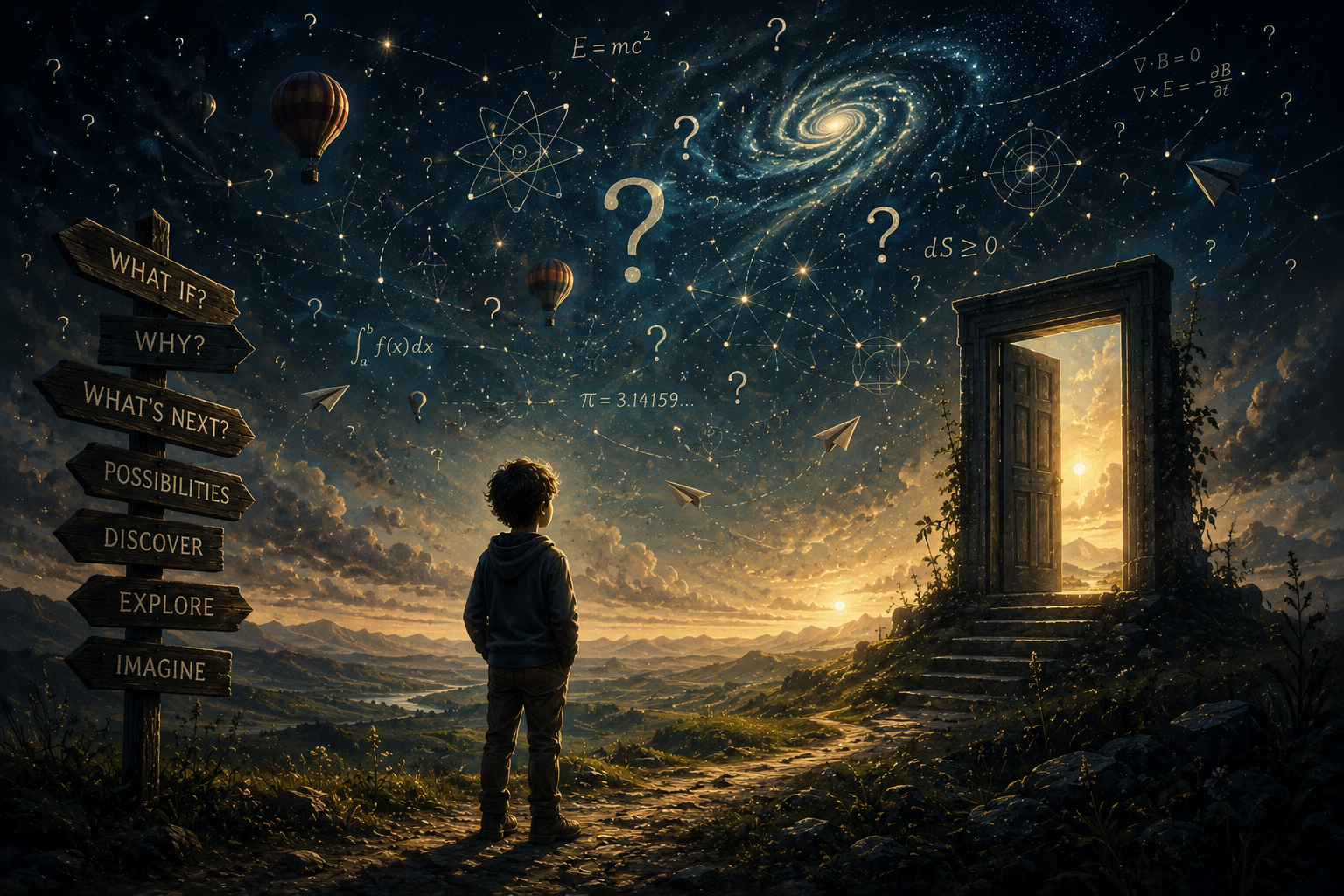
Curiosity begins with a question.
Not a question seeking immediate answers, but one willing to remain open. It is the quiet impulse that asks, "What lies beyond the horizon?" before the destination can even be imagined.
Curiosity has shape.
Sometimes it appears as a straight path, following careful observation toward understanding. At other times it branches unexpectedly, transforming a single question into dozens more. Every discovery opens new landscapes that were previously invisible.
Children demonstrate curiosity effortlessly. They dismantle objects to understand them, ask impossible questions, and explore without fear of appearing uninformed. Somewhere along the journey into adulthood, many replace curiosity with certainty. Yet certainty often closes doors that curiosity would have gladly opened.
Science is organized curiosity.
Philosophy is reflective curiosity.
Art is imaginative curiosity.
Exploration is curiosity made visible.
Every civilization has advanced because someone chose to investigate what others ignored. The wheel, the telescope, the microscope, the printing press, spaceflight, and artificial intelligence all began with questions whose answers were entirely unknown.
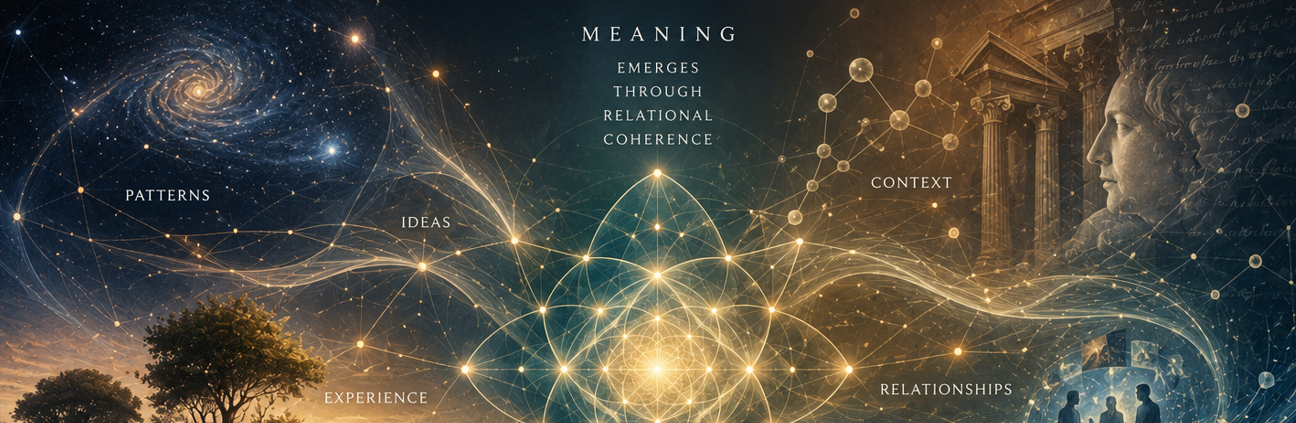
Curiosity is also relational. One idea leads naturally to another, forming chains of inquiry that stretch across centuries. A philosopher influences a scientist. A scientist inspires an engineer. An artist transforms both into something entirely new. Progress is rarely the work of isolated minds; it is the unfolding conversation of countless curious individuals across time.
Artificial intelligence offers an intriguing mirror. Although today's systems do not possess curiosity in the human sense, they reveal how powerful pattern exploration can become. Human curiosity, however, reaches further. It asks not only how something works, but why it matters.
Perhaps curiosity is the geometry of possibility.
Every question creates a branching point where countless futures become imaginable. Some paths lead nowhere. Others reshape the course of history. Yet without the willingness to ask, no path appears at all.
The shape of curiosity is therefore expansive rather than complete. It values exploration over certainty, dialogue over dogma, and discovery over destination.
The Continuum Archive exists because curiosity refuses to accept that the map is finished. Every article is another question placed carefully beside those that came before, inviting future travelers to continue the journey.