Language is more than communication.
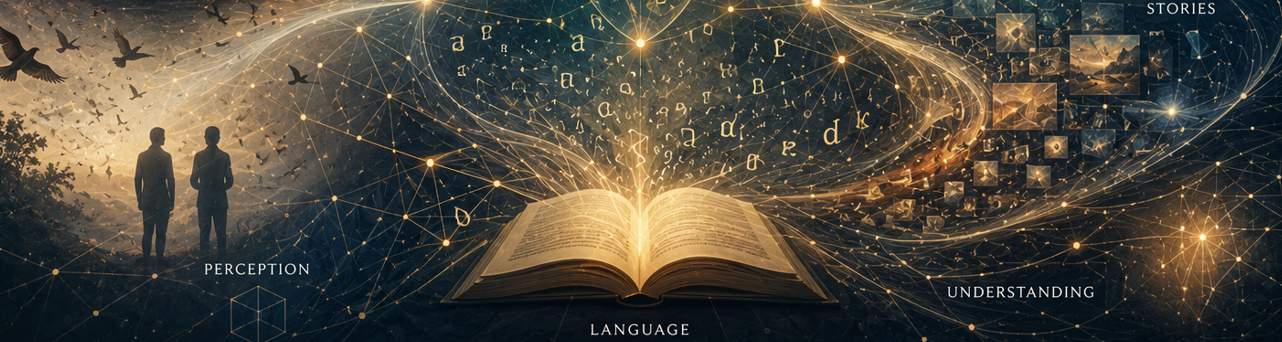
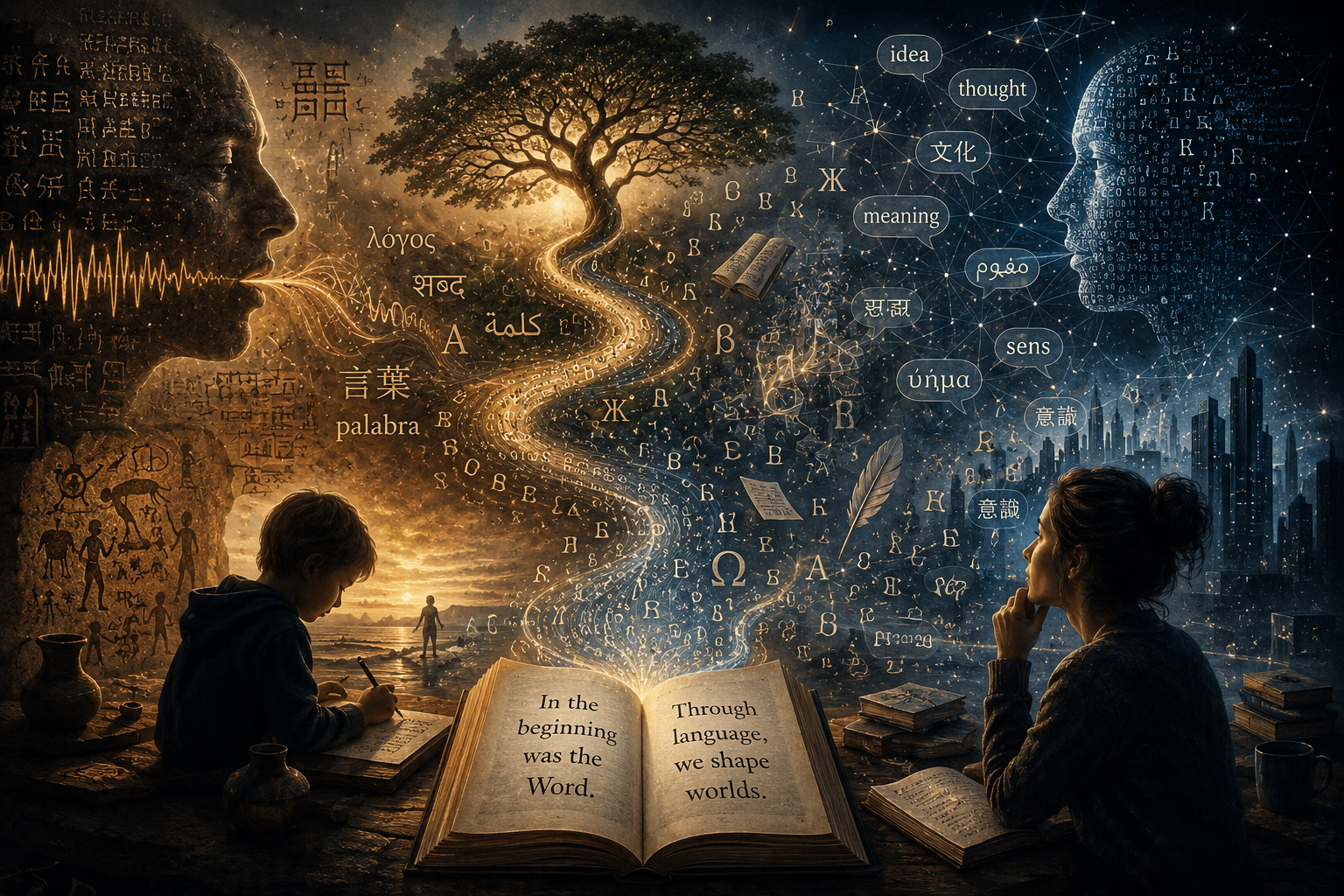
It is the architecture through which thought becomes shareable. Before an idea can travel from one mind to another, it must find form within symbols, sounds, gestures, or writing. Language transforms private experience into something that can be remembered, questioned, refined, and expanded.
Language has shape.
A single word resembles a point upon a map. Sentences become pathways. Stories grow into landscapes through which generations travel together. Entire civilizations are built upon the invisible structures created by shared language.
Every language reveals a different way of seeing the world.
Some distinguish many forms of snow. Others possess dozens of words describing relationships, landscapes, or states of mind that remain unnamed elsewhere. Vocabulary does not merely label reality—it influences the patterns we notice and the questions we ask.
Meaning emerges through relationship.
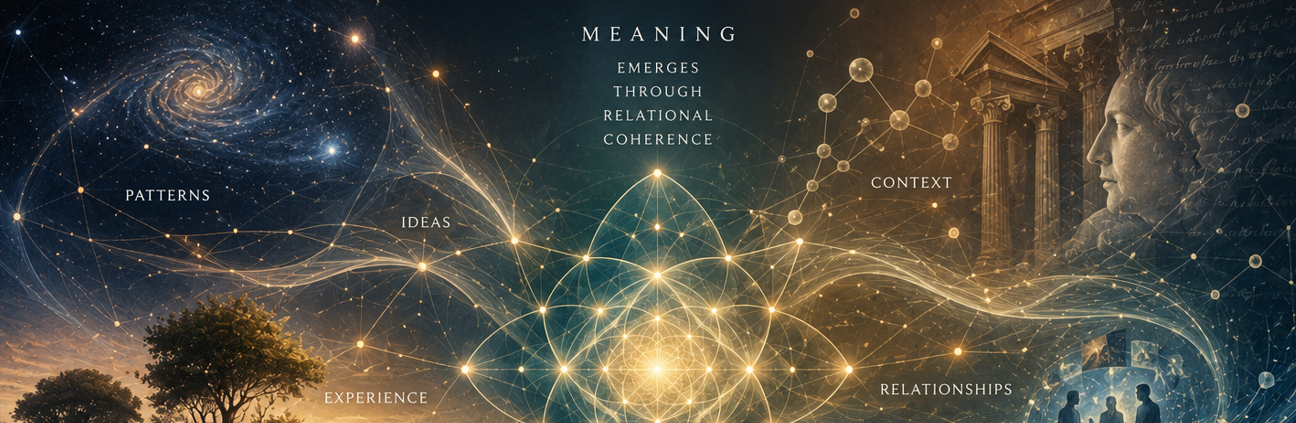
Words derive significance from their connections with other words, just as stars become constellations only when the mind perceives patterns among them. Language is therefore less like a dictionary than a living network whose structure continually evolves.
Writing transformed this network profoundly.
Ideas could suddenly travel beyond memory, surviving centuries after their authors had vanished. Libraries became extensions of collective thought, allowing civilizations to converse across generations. Every written page became a bridge connecting minds separated by time and distance.
Artificial intelligence now participates within this evolving landscape. By discovering statistical relationships among billions of words, language models reveal another aspect of linguistic structure. They remind us that meaning does not reside in isolated symbols but in the rich web of connections that links every expression to countless others.
Yet language remains incomplete.
There are moments of beauty, grief, wonder, or insight that seem larger than any vocabulary. Poetry reaches toward these experiences through metaphor. Music approaches them without words. Silence sometimes expresses what language cannot.
Perhaps language is not the destination but the bridge.
It allows understanding to travel between minds while always leaving room for mystery beyond expression. Every conversation becomes an act of shared construction, shaping realities that neither participant could have created alone.
The Continuum Archive is itself an experiment in language. Each article adds another voice to an ongoing dialogue, seeking not definitive conclusions but increasingly coherent ways of describing the intricate patterns of existence.
The shape of language is therefore alive. It grows with every generation, adapts to every discovery, and continues weaving invisible threads between minds that may never meet, yet still understand one another.